Certification
Start sailing with ASA 101
Start your sailing journey with the ASA 101 Basic Keelboat course.

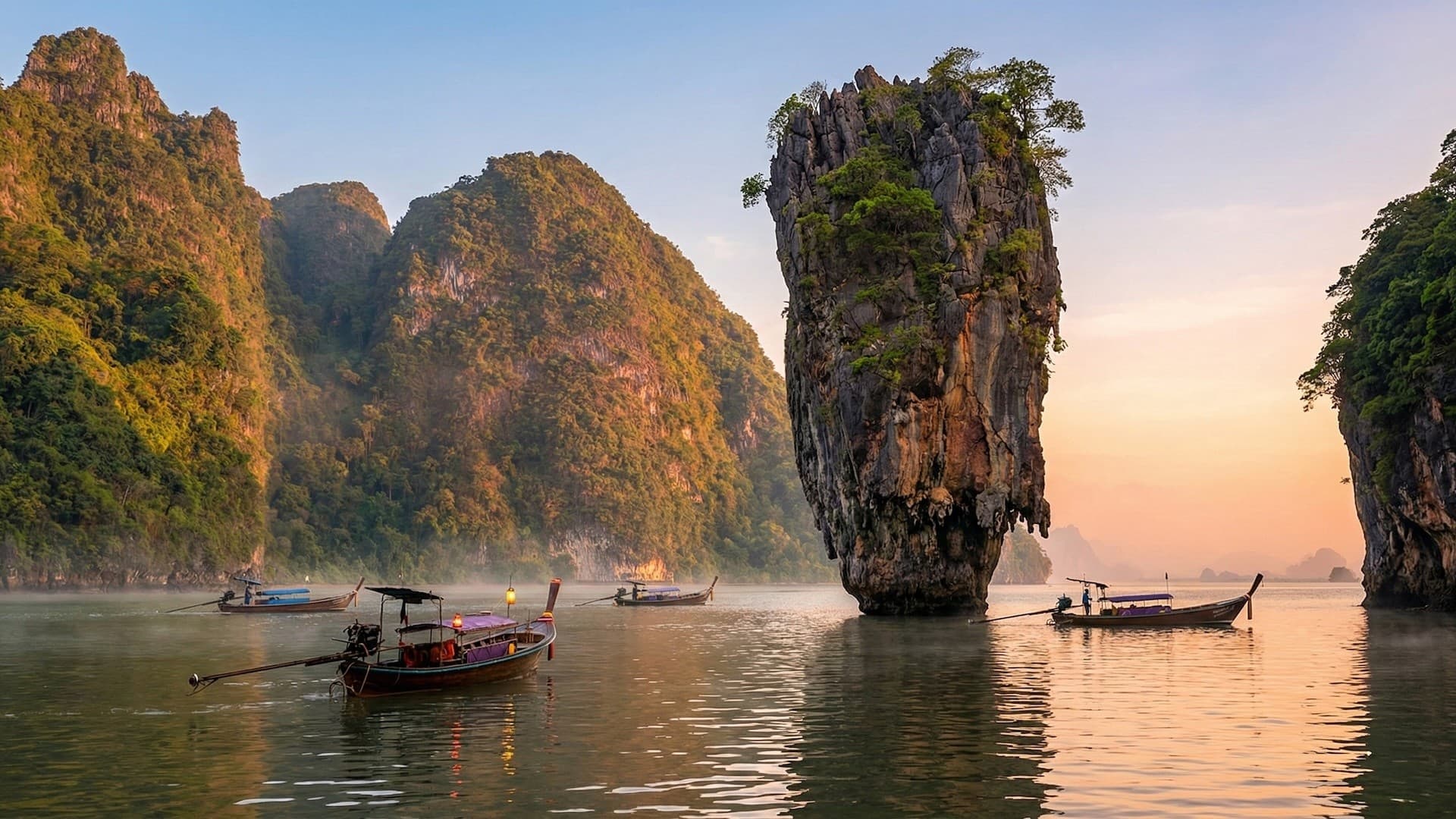
Southeast Asia's best-kept sailing secret. The world's best food, the bluest water, and not another yacht in sight.
Flexible cancellation up to 90 days before your course.
Real departures, live availability — hold your spot below.
Departing from Salakphet Bay on Koh Chang's quiet southeast corner, our sailors — almost all complete beginners working toward ASA 101 and ASA 102 — learn to sail in one of the calmest, most uncrowded sailing grounds left in Asia. Over seven days aboard a Lagoon 421 catamaran, you'll cross the Gulf of Thailand to the outer islands of the Koh Chang Archipelago: Koh Wai's coral gardens, Koh Mak's coconut backroads, Koh Kood's jungle waterfalls, and the marine-reserve silence of Koh Rang. The northeast monsoon delivers reliable 10–20 knot breezes and almost no rain from November through April. Twelve to twenty-five nautical miles between stops, sheltered anchorages every night, and a max of six sailors aboard — the conditions are forgiving enough to build genuine confidence and beautiful enough that nobody wants the week to end. If you've been looking for a learn to sail vacation in Thailand — real certifications, real islands, real Thai food — this is it.
While Phuket and Koh Samui are saturated with charter traffic, the outer Koh Chang Archipelago — Koh Mak, Koh Kood, and the Koh Rang marine reserve — sees a fraction of the boats. Most days you anchor with no one else in the bay.
Earn ASA 101 (Basic Keelboat) and ASA 102, globally recognised certifications and your first step toward bareboat chartering.
No prior experience needed. The northeast monsoon sea state is gentle (0.5–1.5m swell) and passages between islands are short, so confidence builds fast.
Steady 10–20kt breezes from the northeast, almost no rain, daytime temperatures 25–30°C, water 28°C. December and January average just 2–6 rain days a month — the most reliable sailing weather in tropical Asia.
Salakphet seafood on the pier where it was landed that morning. Koh Mak Art House cooking by the family who built the place. Beachside grills on Koh Kood. The food alone is worth the flight.
A Lagoon 421 catamaran is wide, stable, social, and forgiving — the easiest boat in the world to learn on. With a maximum of six sailors and one ASA-certified instructor, everyone gets enough helm time to actually leave knowing what they’re doing.
Take our 2-minute quiz to find your perfect sailing adventure!
Take the Quiz
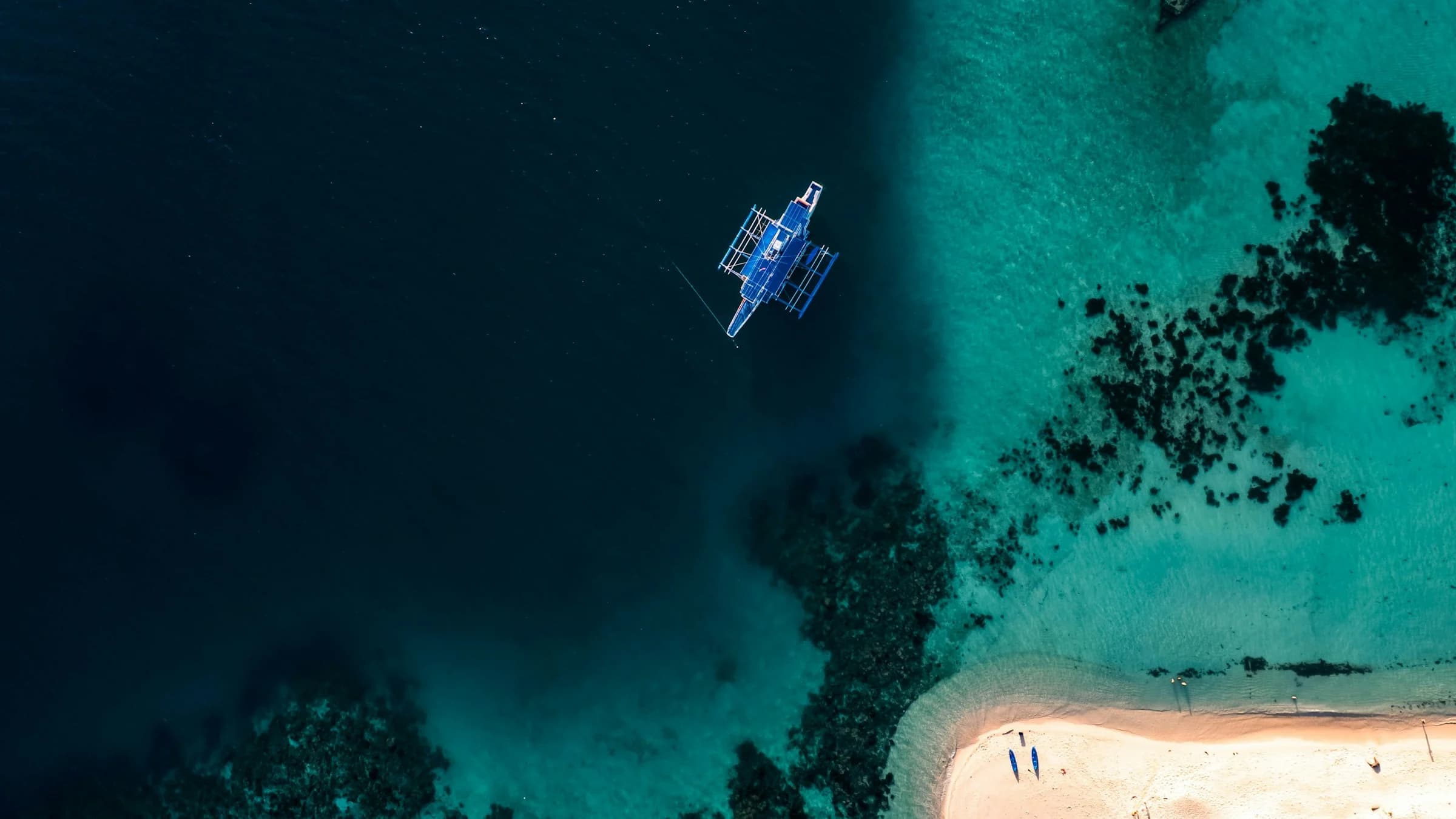
Every morning begins with stillness. You wake at anchor in a bay where the only sound is the halyards tapping the mast and the occasional longtail boat heading out to fish. After the 7-7-7 routine and a swim off the back, you take coffee on deck while your instructor lays charts on the cockpit table and walks the crew through the day's passage — wind angles, tidal set, the rocky shoal off Koh Mak's pier.
Afternoons are spent under sail. Twelve to twenty-five nautical miles between islands means you get genuine sailing — not just motoring — and enough chart work to actually understand what coastal cruising is. By late afternoon you're anchored somewhere new: maybe the wide sand crescent of Koh Wai, maybe the marine-reserve quiet of Koh Rang where the stars come out so bright you can read by them.
Evenings are why people come back. Salakphet Seafood on the pier where the catch landed that morning. Live music at the Koh Mak Art House. Sunset cocktails at Cococape with the catamaran framed perfectly behind. Sailing in the Gulf of Thailand isn't just a course — it's the food, the water, the Thai welcome, and the rare modern luxury of an empty horizon.
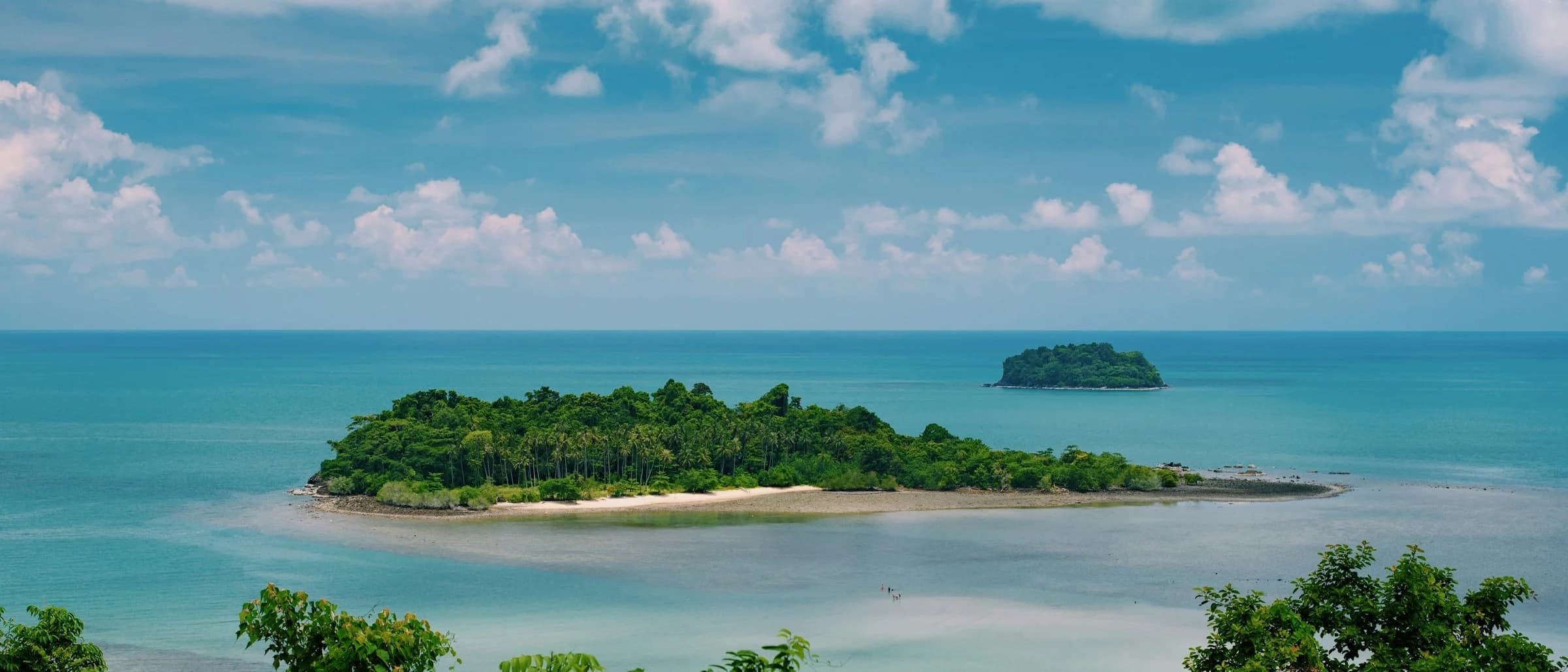
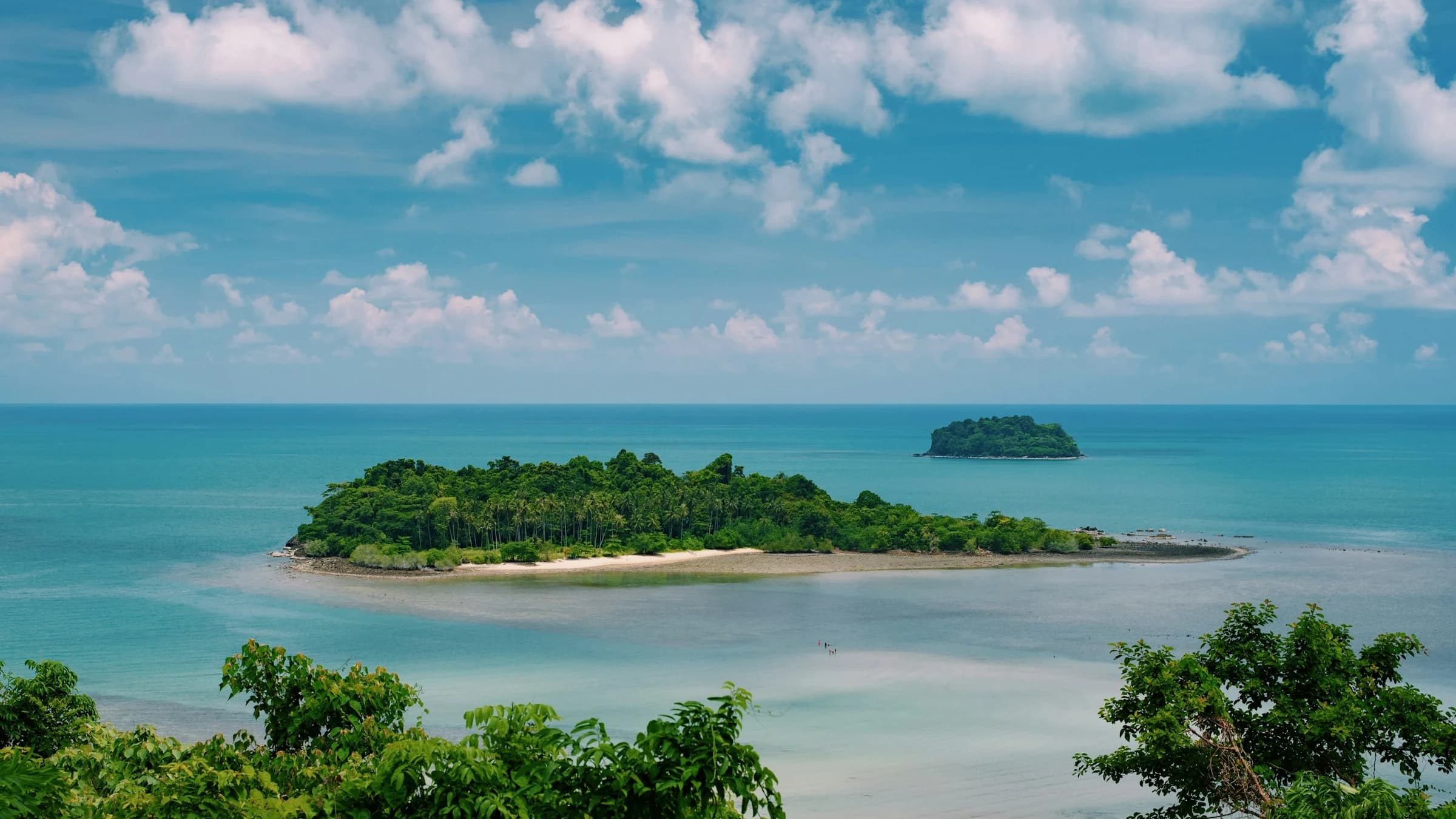
The Koh Chang Archipelago sits on Thailand's eastern seaboard, just south of the Cambodian border, far from the cruise ships and charter fleets of Phuket. It's the inverse of the Andaman side: when the southwest monsoon makes the west coast of Thailand unsailable from May to October, the Gulf settles into the most reliable sailing weather in tropical Asia. November through April is dry, breezy, and warm — and the fifty-two islands of the archipelago are spread across just over a hundred nautical miles of forgiving cruising ground.
Variety is the second reason to come. In a single week you anchor off uninhabited reefs at Koh Wai, eat dinner with locals on Koh Mak, dinghy up a jungle estuary to a waterfall on Koh Kood, and spend a night under the stars in the no-take marine reserve at Koh Rang. The passages between are short enough to be approachable for first-time sailors and substantial enough to teach real coastal navigation — chart work, position fixing, watch rotation, anchoring on sand in 8m.
And then there's the Thai part. Salakphet is a working fishing village with a seafood restaurant on the pier and a single road in. Koh Mak has bicycles instead of cars and an Art House that puts on live music nightly. Koh Kood has resorts that won't break the budget and a waterfall hike that ends in a swimming hole. The country, the food, the warmth — Thailand is one of the great destinations on its own. Sailing it is the version most travellers never see.
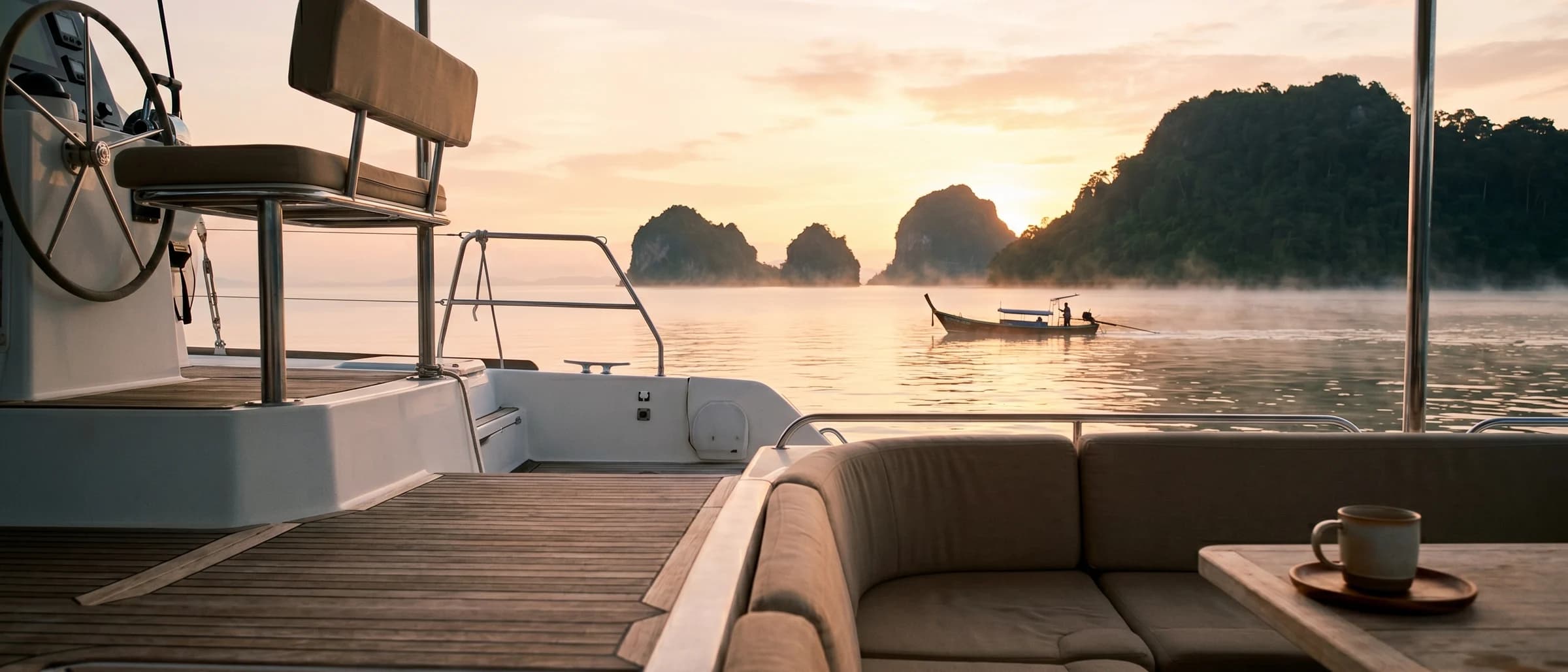
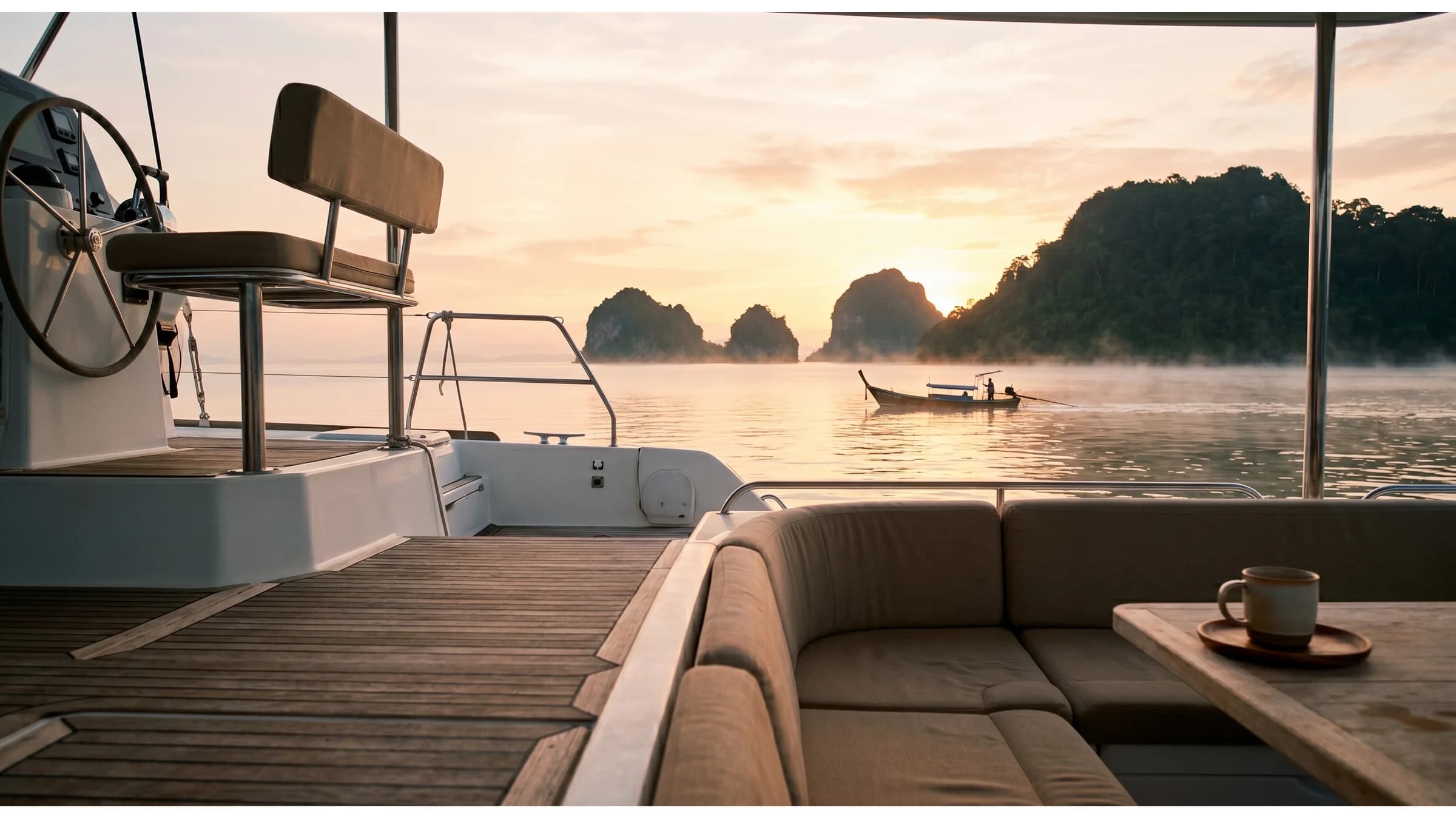
From sunrise yoga to sunset cocktails — here's what a typical day looks like on your Thailand sailing adventure.
| Time | Activity | What You'll Learn | Vibe |
|---|---|---|---|
| 07:00 | The 7-7-7 Morning Routine | 7min breathing practice, 7min meditation, 7min workout — the Sailing Virgins way | Zen |
| 07:30 | Gulf Morning Swim | Step off the swim platform into 28°C water and watch the sun come up over the archipelago | Zen |
| 08:00 | Crew Breakfast | Fresh fruit, Thai coffee, and the day’s passage plan on the cockpit table | Social |
| 09:30 | Theory Session | Charts of the Gulf, NE monsoon patterns, and how to read a coral-edged anchorage | Academic |
| 11:00 | Up Anchor & Sail | Tacking and sail trim drills under steady 10–15kt breezes between Koh Wai and Koh Mak | Active |
| 13:00 | Lunch at Anchor | Drop the hook in a sheltered cove, jump in for a snorkel, eat together on deck | Social |
| 16:00 | Anchoring Practice | Set, snub, and back-down on sand in 7–10m — the SV anchoring SOP, repeatedly | High Focus |
| 19:00 | Dinner Ashore | Dinghy in for fresh seafood at Salakphet pier or sunset cocktails at Cococape on Koh Mak | Celebration |
7min breathing practice, 7min meditation, 7min workout — the Sailing Virgins way
ZenStep off the swim platform into 28°C water and watch the sun come up over the archipelago
ZenFresh fruit, Thai coffee, and the day’s passage plan on the cockpit table
SocialCharts of the Gulf, NE monsoon patterns, and how to read a coral-edged anchorage
AcademicTacking and sail trim drills under steady 10–15kt breezes between Koh Wai and Koh Mak
ActiveDrop the hook in a sheltered cove, jump in for a snorkel, eat together on deck
SocialSet, snub, and back-down on sand in 7–10m — the SV anchoring SOP, repeatedly
High FocusDinghy in for fresh seafood at Salakphet pier or sunset cocktails at Cococape on Koh Mak
CelebrationA circular 112nm Gulf Explorer route through the outer Koh Chang Archipelago. From Salakphet Bay you head south to the coral gardens of Koh Wai, west to Koh Mak's coconut backroads, on to the Klong Chao waterfall on Koh Kood, then south again to the marine-reserve silence of Koh Rang before looping home.
Fly into Bangkok Suvarnabhumi (BKK). We meet you at the airport with a private van for the 4.5-hour transfer to Salakphet pier on Koh Chang's southeast corner. Board the Lagoon 421, settle in, run a safety briefing, and get the ASA 101 introduction over a sundowner at Salakphet Seafood — the village restaurant on the pier where everything comes off the boats that morning. Night one is at anchor in the bay.
Your next great story is waiting to begin.
Don't let another summer slip by without making this dream a reality.
Join our Thailand sailing school and set sail on an unforgettable adventure!
Flexible cancellation up to 90 days before your course.
Bangkok Suvarnabhumi (BKK), not Phuket. We provide a private van transfer from BKK direct to Salakphet pier on Koh Chang — about 4.5 hours each way. Plan to arrive in Bangkok the day before; the van leaves early. We can recommend Bangkok hotels close to the pickup point.
Yes — most of our sailors here are complete beginners. The Gulf of Thailand is the gentlest place to learn in tropical Asia: short passages, sheltered anchorages, light to moderate winds, and a Lagoon 421 catamaran that is genuinely forgiving. You leave the week with ASA 101 and ASA 102, your first step toward bareboat chartering.
The programme runs November through April only — the northeast monsoon. December and January are the driest and coolest months (averaging 2–6 rain days each); February and March bring lighter breezes that suit beginner-heavy crews. May to October is the southwest monsoon, when ferries to the outer islands suspend service and the weather is too unsettled to teach in.
Plan on 15,000–20,000 Thai Baht in cash per sailor (roughly $400–$550). ATMs on the outer islands are limited and unreliable, and you’ll want cash for shore dinners, optional dives, taxis, and cocktails. Pull baht from an ATM in the BKK arrivals hall — the exchange rate is better than at home or at the pier.
Soft duffel only — no hard luggage, the cabins are tight. Quick-drying shorts and shirts, swimwear (×2), reef-safe sunscreen (mandatory in Mu Ko Chang Marine Park), polarised sunglasses with a backup, a light rain jacket, water shoes for reef and beach landings, insect repellent for evenings ashore, any personal medications, and a passport valid for at least six months from departure.
Breakfast, lunch, and snacks are aboard every day — fresh fruit, Thai coffee, light Thai-style lunches. Dinners are ashore four nights of the week (Salakphet pier, Koh Mak Art House, Koh Kood beach restaurants, Koh Mak again on the return) and aboard the other two. Budget around $12–$20 per shore dinner — Thailand is excellent value. Drinks ashore aren't included.
You earn ASA 101 (Basic Keelboat) and ASA 102 over the week. Theory is taught daily on deck and through the practical exercises; written exams are short and given on Day 6. Both certifications are recognised by ASA-affiliated sailing schools and charter companies worldwide. To charter a yacht on your own, most companies ask for ASA 104, which you earn on our Intermediate week (ASA 103 + 104).
Both — that's the point. It's a learn to sail vacation in Thailand: you earn ASA 101 and ASA 102 through daily hands-on instruction, and the classroom happens to be the Koh Chang Archipelago — snorkeling at Koh Wai, a waterfall hike on Koh Kood, and Thai dinners ashore most evenings. Instruction, accommodation aboard the catamaran, and certification exams are all included.
Many sailors fly back to Bangkok for a couple of nights to eat their way through the city — Chinatown street food, the rooftop bars, the temples. Others connect on to Chiang Mai, Phuket, or Singapore. The van transfer drops you at BKK, so onward flights are easy. We can suggest hotels in Bangkok and route ideas if you want help.
Start your sailing journey with the ASA 101 Basic Keelboat course.
How to pick your first sailing course as a complete beginner.
Never sailed before? Start with a week-long liveaboard beginner course.
The gentlest way in: a first taste of life aboard and sailing basics.