Certification
Start sailing with ASA 101
Start your sailing journey with the ASA 101 Basic Keelboat course.

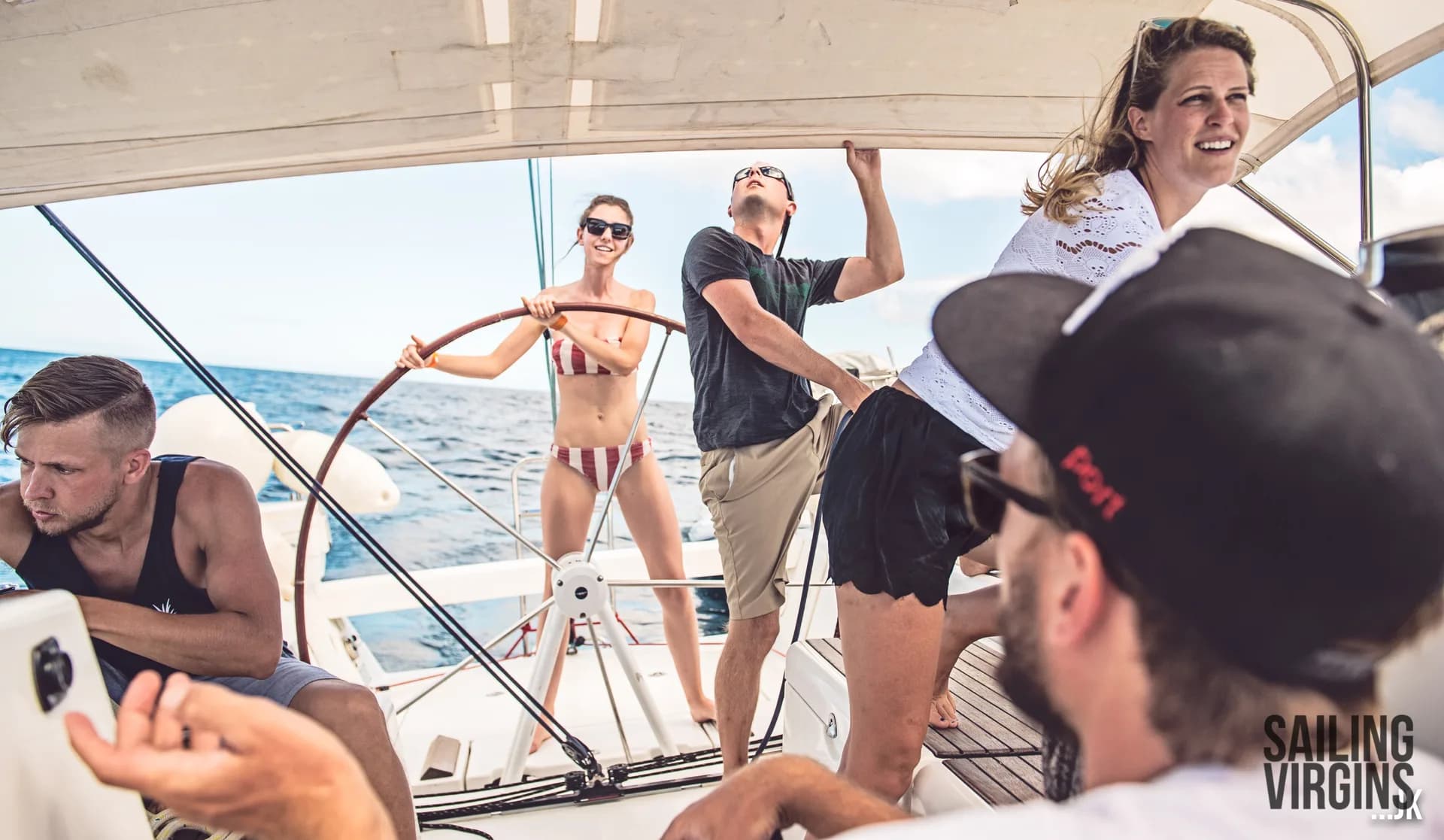
Yes, if you spend the week living on the boat. Here is what seven days really covers, and who it is right for.
See Beginner weeks ASACertified School
Yes. In one week aboard a cruising yacht, a complete beginner can learn to sail a keelboat well enough to help crew it with confidence: steering, trimming the sails, tacking and gybing, picking up a mooring, anchoring and handling the lines. Most of our sailors arrive with no experience at all. What a week will not do is turn you into a charter skipper. Being trusted with a charter yacht on your own (ASA 104, Bareboat Cruising) takes a second week. That is why we run the levels as steps: a Beginner week first, then an Intermediate week when you want to skipper. The reason a week works is simple. You do not go home at five. You sail from morning to evening, sleep on the boat, and wake up to do it again, so every day builds on the last.
Our Beginner week teaches two ASA levels, and you can earn up to two certifications if you want them. From January 2027, Beginner weeks cover ASA 101 (Basic Keelboat Sailing) and ASA 102 (Keelboat Sailing 2). Beginner weeks still running in 2026 pair ASA 101 with ASA 103 (Basic Coastal Cruising). ASA 101 is the foundation: how a sailboat works, points of sail, steering, sail trim, tacking and gybing, right of way, knots, and what to do if someone falls overboard. ASA 102 builds on it with more time handling the boat yourself, so you leave a far more capable crew member. Certification depends on what you show on the water and in the written tests, not on turning up. If you do not pass a level that week, you still keep everything you learned, and you can finish it on a later trip. If you only want the sailing and the company, you can skip the exams, and that is completely fine.

ASA 103 (Basic Coastal Cruising) and ASA 104 (Bareboat Cruising) are taught together on our Intermediate week. ASA 104 is the one charter companies look for when you want to rent a yacht and skipper it yourself. You need ASA 101 to join. If you already sail but have no ASA 101, you can sit the official ASA 101 test and go straight to the Intermediate week. On a catamaran, Intermediate and Advanced weeks also earn ASA 114 (Cruising Catamaran). If you did a 2026 Beginner week, you already hold ASA 103: the Intermediate week recaps it, goes deeper into those skills, then adds ASA 104. So the realistic path from zero to chartering your own boat is two weeks, not one. Many of our sailors do them a few months apart, or back to back in the same season.
Most of every day. You sail between islands and anchorages, so the boat is moving for real distances, not circling a harbour. Theory happens around it: a chart and a coffee in the morning, a quick talk-through before a manoeuvre, and practice for the written tests in the evenings. We keep it to 5 students per instructor, and bigger crews sail with a co-instructor, so you get your turn at the helm all week instead of watching. Roles rotate: one day you steer into the anchorage, the next you are on the bow calling depths, the next you are trimming the main. We do not quote a number of helm hours, because it depends on the wind, the route and the crew. What we can say is that you will be steering, trimming and making decisions every day, not just once.
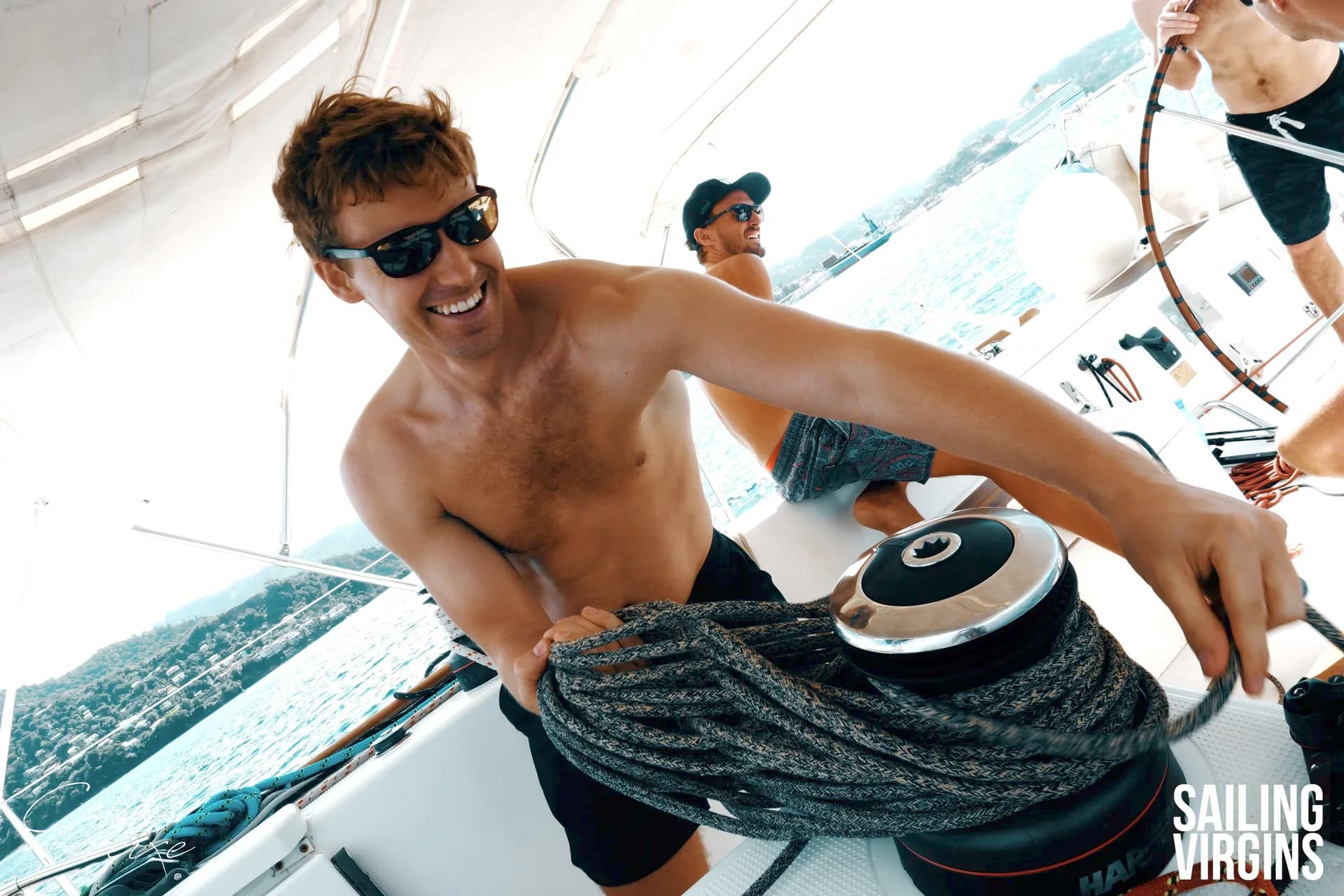
It suits you if you like learning by doing, are happy sharing a boat with a small crew, and want a real adventure rather than a lounger. Solo travellers do especially well: you share a cabin with another guest of the same gender, and the crew becomes your friends by midweek. Couples and friends booking together are welcome too. It also suits people who want a clear next step. If your goal is to charter a yacht with friends one day, a Beginner week then an Intermediate week is a straight line to get there.
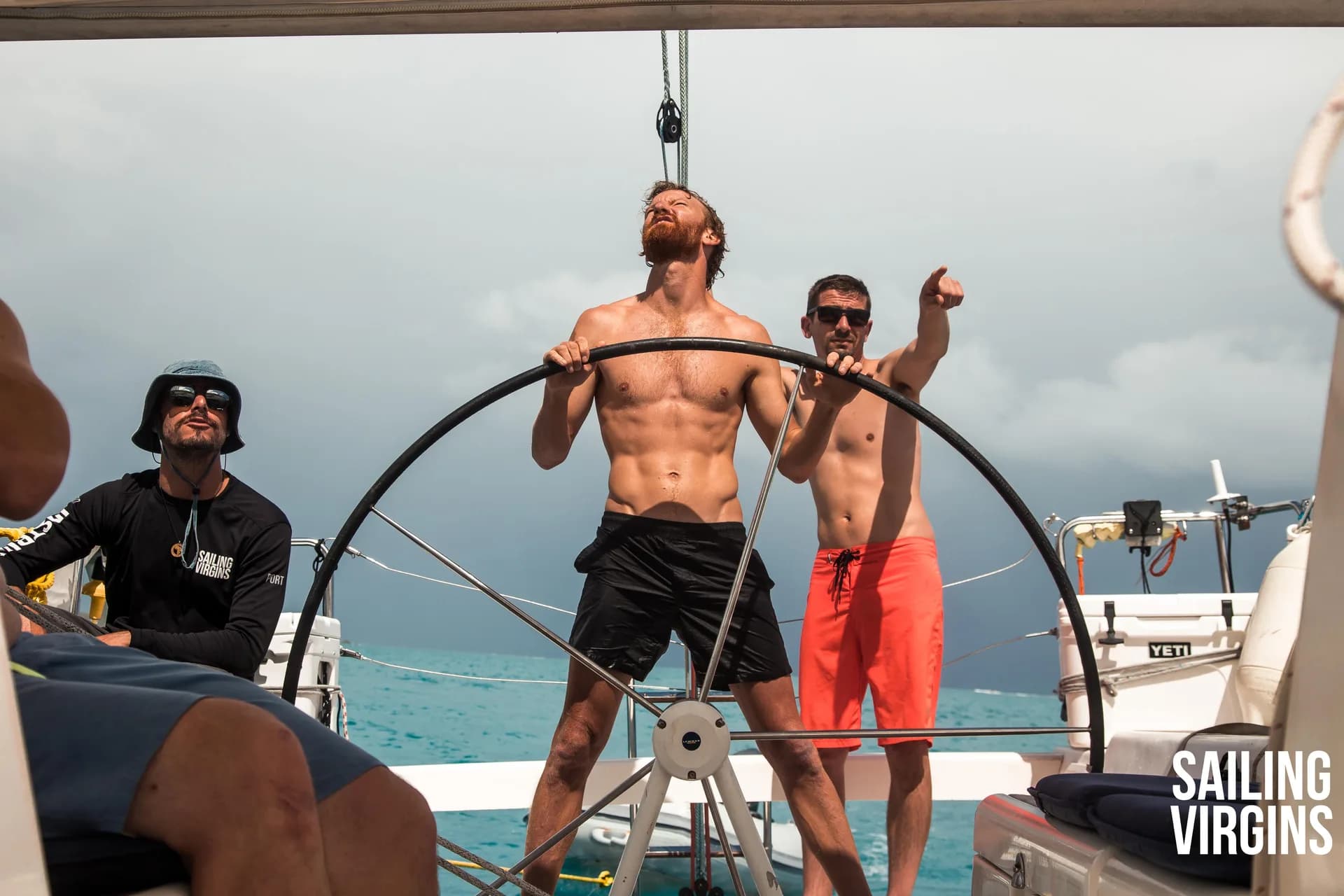
If you want to be sailed around rather than learn, a skippered charter will make you happier: someone else handles the boat and you swim and relax. If you need a private cabin and your own pace, a private boat with your own instructor fits better than a shared course week, and that is what we suggest for many guests in their 50s and older. A live-aboard week is active. You will be climbing in and out of the dinghy, moving around a boat that heels, and living in a compact space. Sailors aged 60 or over at the start of the course need a doctor-signed Fitness to Sail form. If any of that gives you pause, talk to us before you book and we will tell you plainly whether a course week, a private boat or something else is the better fit.
Join 1,200+ graduates who discovered their passion for sailing with Sailing Virgins. ASA certified, 5-star rated, and unforgettable.
See Beginner weeksStart your sailing journey with the ASA 101 Basic Keelboat course.
Combine a tropical vacation with ASA sailing certifications.
Learn to sail by living aboard the yacht for a full week.
Never sailed before? Start with a week-long liveaboard beginner course.