
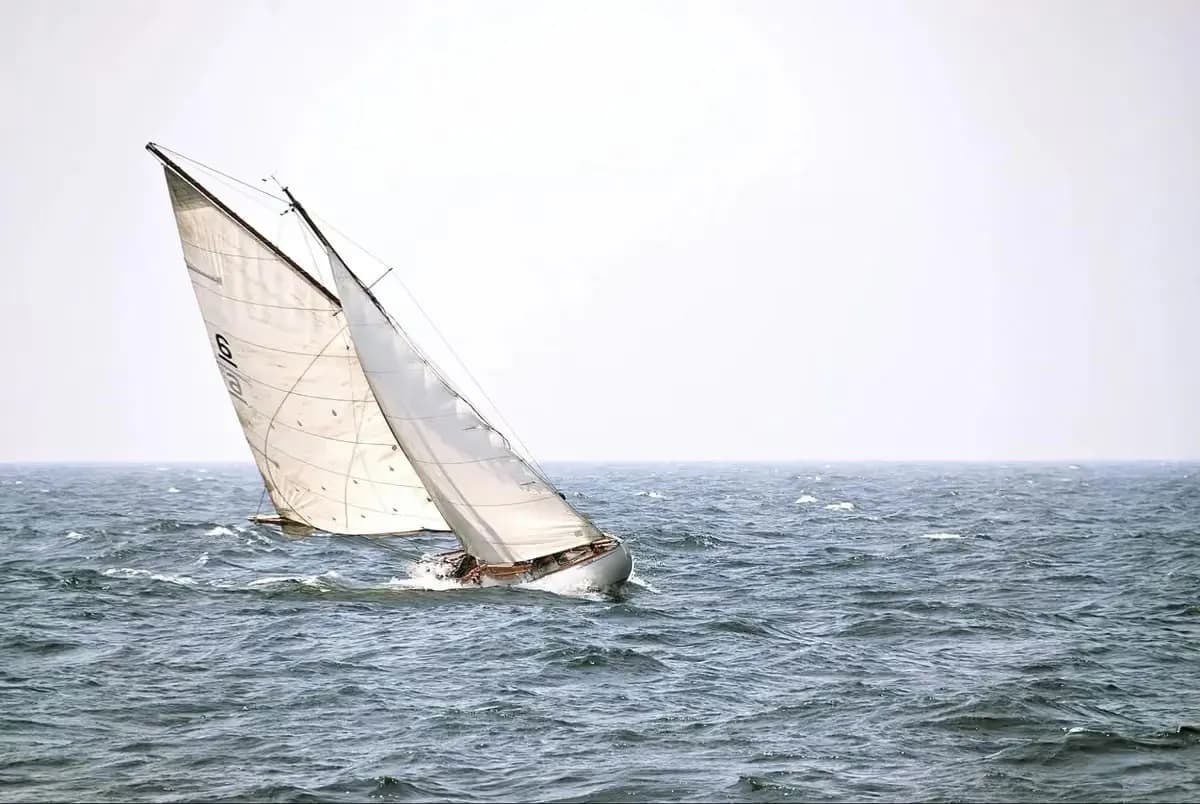
A gust hits, and the rail dips toward the water. The wheel feels heavy, and your first thought is to dump the mainsheet.
But there’s a quicker way. It’s on the track in front of your cockpit. In this blog, you’ll learn to use traveler controls. They help reduce the mainsail's pull, so you won’t need to re-trim the mainsheet.
You’ll spill wind in a gust and bring the drive back during the lull. The sail maintains its shape throughout.
What the Traveler Does to Your Mainsail
The traveler is a track that runs side to side on a sailboat. You'll find it ahead of the cockpit, or on the raised deck between the cockpit and the cabin.
A traveler car rides on that track. The car carries the lower mainsheet block, which the mainsheet runs through.
Windward is the side the wind blows from. Pull the car to windward and the boom swings in toward the centerline.
Leeward is the side away from the wind. Let the car slide to leeward, so the boom swings out.
The boom holds the bottom edge of the mainsail, so the sail follows wherever the boom goes. Moving the car sets the sail's angle relative to the wind; sailors call this the angle of attack.
Angle of attack determines how much drive the sail makes. Swing the boom out, and that angle narrows, so the sail produces less drive and the boat heels less.
Traveler vs. Mainsheet: What's the Difference?
The leech is the trailing edge of the mainsail. Your mainsheet pulls down on the boom and tightens that edge.
Leech tension sets twist. Twist is how far the top of the sail falls away to leeward compared with the bottom. A twisted sail spills wind from the top.
The traveler doesn't affect twist at all. It moves the boom sideways, which sets the boom's angle relative to the centerline.
On a boat without a traveler, the two jobs run together. Sheet in to bring the boom to the middle and pull the twist out at the same time. A traveler lets you set the angle and the twist separately.
How to Use Traveler Controls
Close-hauled means sailing as close to the wind as the boat will go. When you're close-hauled, the mainsheet does the rough work and the traveler does the fine work.
Trim the mainsheet first: Pull it in until the top batten runs parallel to the boom. That batten is the long stiffener near the top of the sail.
Read the top telltale: That short ribbon on the leech should flow straight back, then lift and settle. If it curls in behind the sail, ease the sheet until it flows again.
Pull the traveler car to windward: Keep hauling until the boom rests on the centerline.
Fine-tune from there: Nudge the car rather than hauling the sheet.
A centered boom gives you the baseline for full drive. You'll work the car up or down from that spot as the wind rises and drops.
Where to Set the Traveler in Steady Wind
Here's where the traveler car belongs in each wind range.
Light air: car well up to windward. The eased mainsheet lets the boom hang out, so the car travels a long way to center the boom. The open leech keeps twist in the sail, which helps in light wind.
Moderate breeze: car near the centerline. You get full drive with a comfortable heel angle.
Heavy breeze: car down to leeward, mainsheet hauled in hard. The twist is squeezed out, and the sail flattens, so the boat heels less.
The traveler is one part of a heavy-air setup. Reefing, headsail choice, and steering matter when sailing in heavy winds.
None of it works on a worn-out sail. A mainsail that's stretched and gone baggy holds a deep, round shape no matter what you pull on.
What Heel and Weather Helm Tell You
Once you've set your baseline, the wind starts moving around. Two signs tell you to work the traveler.
Heel: The boat leans further than it did a minute ago, and the rail heads toward the water.
Weather helm: The bow tries to turn up into the wind, so you hold the wheel to resist the turn.
Both mean the same thing. You're carrying too much angle of attack for the pressure you've got right now.
Ease the traveler to leeward until the helm goes light again. How far down the car goes depends on the gust.
In gusty wind, leave the mainsheet cleated and work the traveler alone. You'll have fewer moving parts and can adjust the line more quickly.
Haul the car back up as the gust passes and full drive returns. Ease the mainsheet and the leech opens, so you'll reset the twist afterward.
When the Traveler Isn't Enough
The traveler has a bottom stop, and some days you reach it. Follow this order when the boat is still overpowered.
Ease the mainsheet: The leech opens, and you can't sail as close to the wind. That's a fair trade here.
Reef the mainsail: Fold down part of the sail and tie it off. The boat then carries less sail.
Reefing beats sailing all afternoon with the car at the bottom of its track. You weigh trade a few degrees of upwind angle when you choose between pinching and footing.
Traveler Settings Off the Wind
Everything above assumes you're sailing close-hauled. You'll use the traveler less as you turn away from the wind.
On a beam reach, the wind comes over the side of the boat. Keep the car near the middle, then ease it a few inches to leeward as the boom goes out.
On a broad reach or a run, the traveler car reaches the end of its track. The car stays at the end, and the boom vang controls the boom instead. The vang is the tackle that pulls the boom down toward the deck.
How Your Rig Affects Traveler Movement
Rig type determines how far the car should move.
On masthead rigs, the headsail runs to the top of the mast and overlaps the mainsail. A headsail is the sail set in front of the mast. These rigs have a large traveler range. This lets you push the car hard through the puffs.
Newer fractional boats fly a headsail that stops short of the masthead. They have a bigger mainsail. This means their traveler cars move shorter distances, and you adjust the mainsheet more often.
Check whether your headsail reaches the masthead, then move the car accordingly.
Practice Traveler Controls on a Sailing Virgins Course
You can read about angle of attack anytime, but a weekend course gives you about eight hours of contact time. You spend some of that in a classroom and some on the water. Eight hours gives you few chances to practice in gusty conditions.
Sailing Virgins runs for seven days aboard the yacht you train on. That works out to roughly 100 hours of sailing experience in one week. Trim the sails during morning lulls, catch the afternoon breeze, and handle gusts between the islands.
Beginners earn ASA 101 and 103 during the week. ASA 104 qualifies you to charter a yacht on your own.
Spend a week with Sailing Virgins and put what you learn into practice. You'll learn how to use traveler controls with a hand on the line and a breeze overhead.